
COLOGNE HONORS THE MEMORY OF RUDOLF DUALA MANGA BELL
A new step in the memory work between Cameroon and Germany
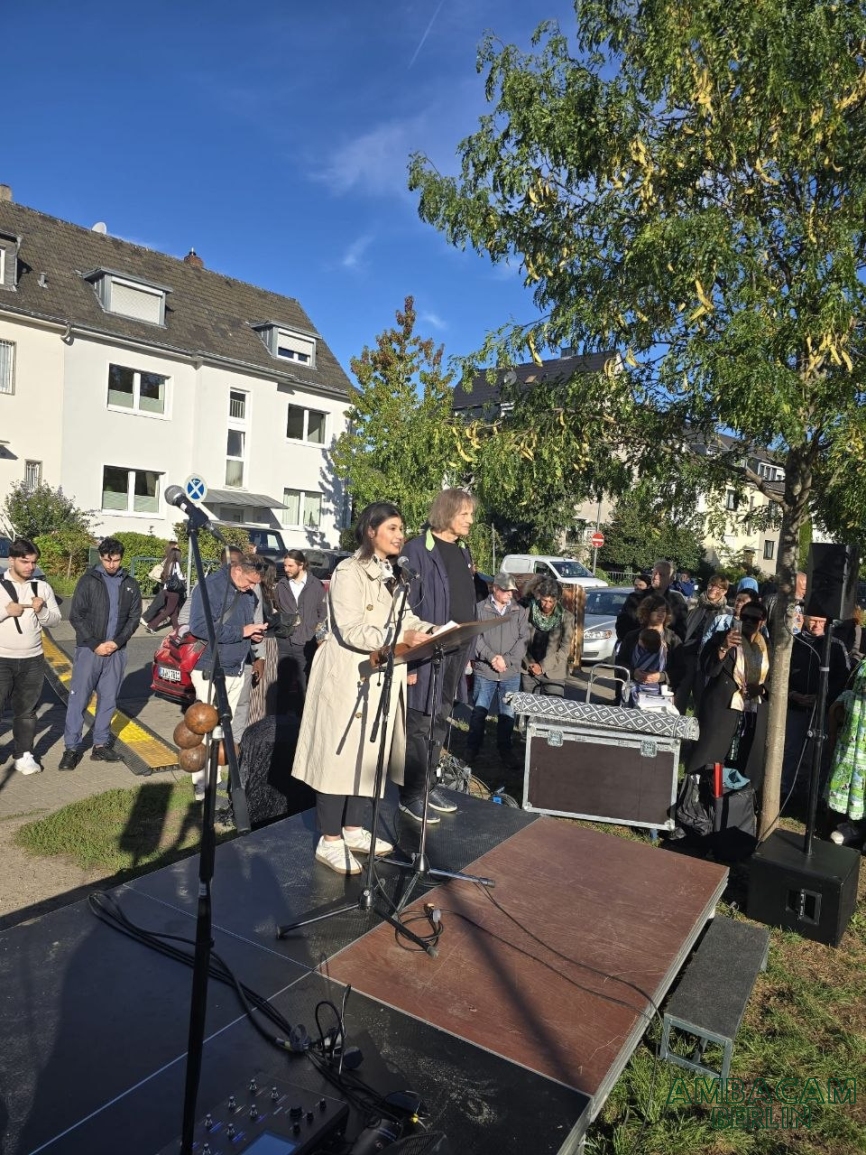
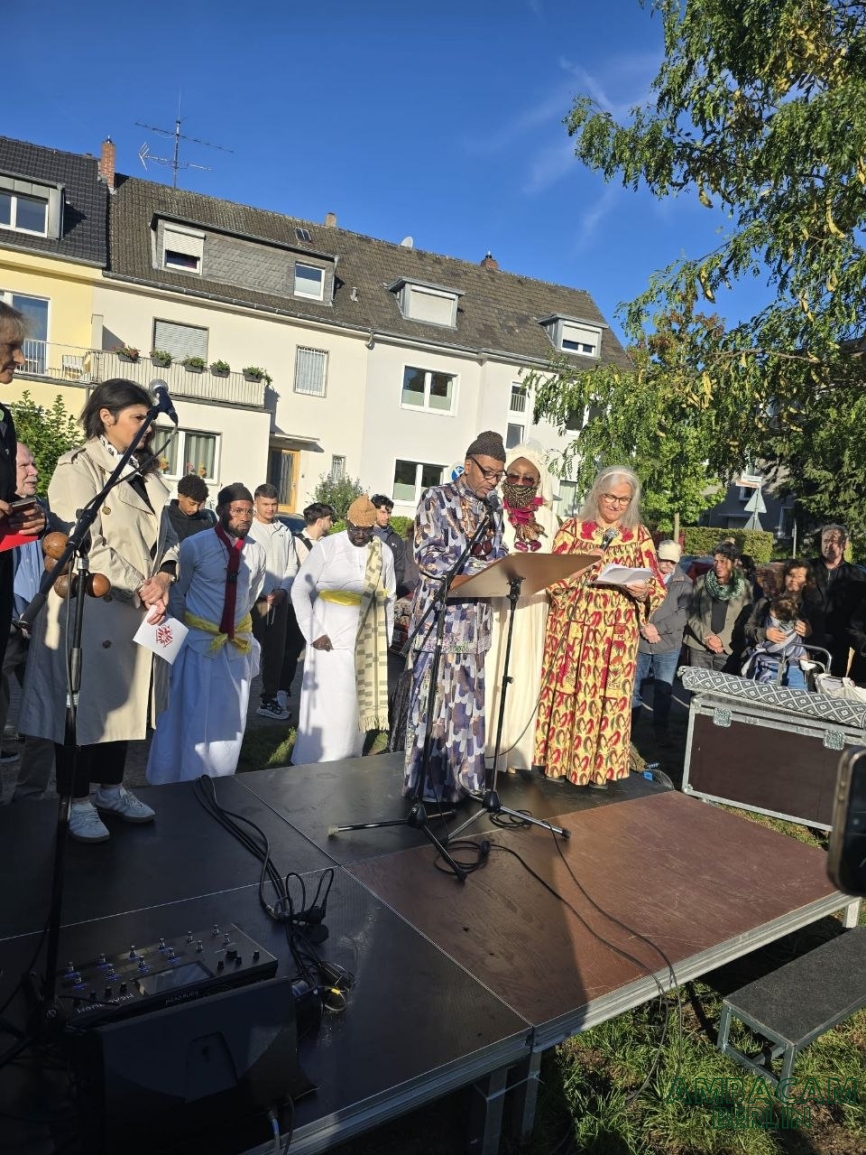
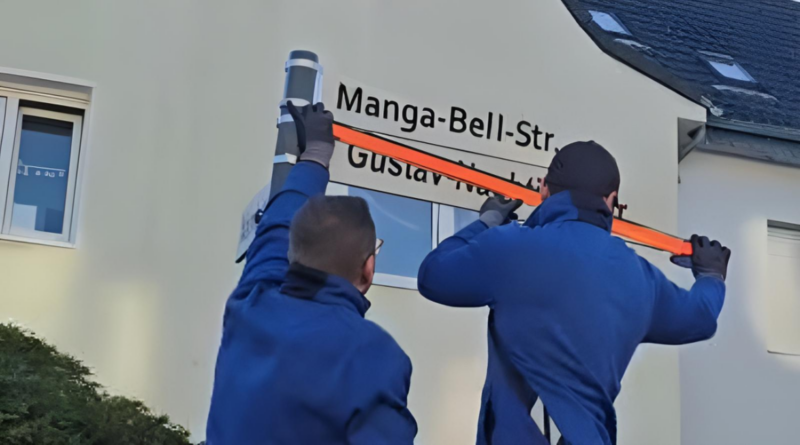
Cologne, 24 September 2026 – The city of Cologne has paid solemn tribute to Rudolf Duala Manga Bell, an emblematic figure of Cameroonian resistance to German colonization, by naming a street in the Cologne-Nippes district after him. The former Gustav-Nachtigal-Straße is now called Manga-Bell-Straße.
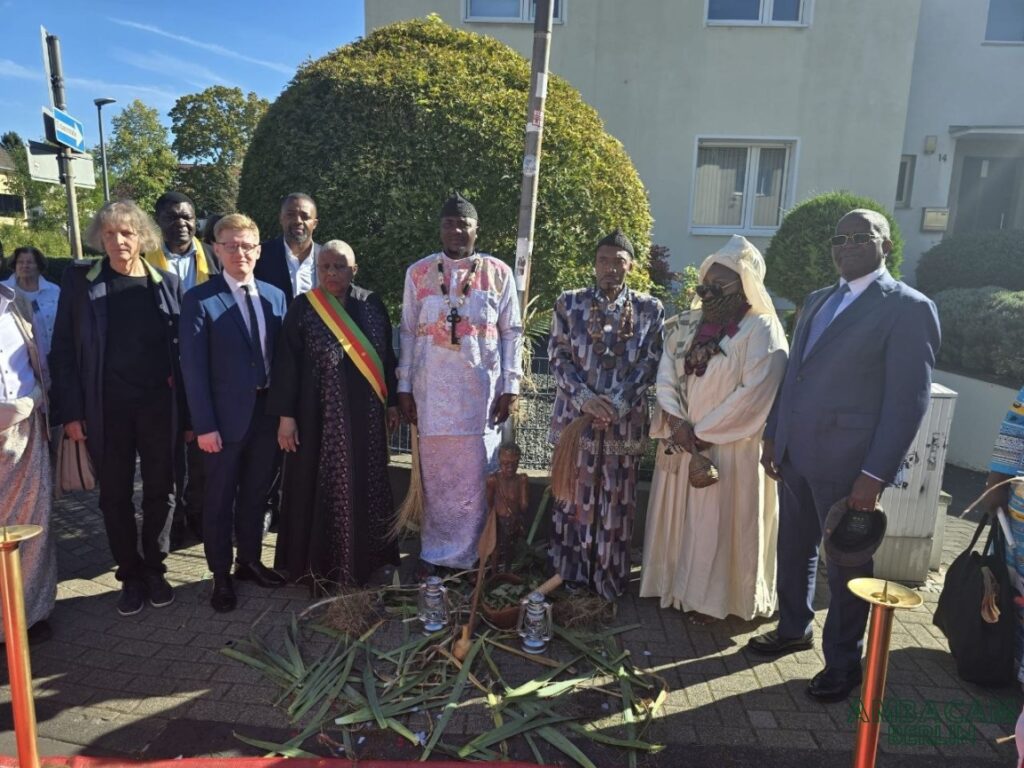
The ceremony, organized on the initiative of the Cologne-Nippes district council, took place in the presence of many German and Cameroonian dignitaries. They included His Royal Highness Jean-Yves EBOUMBOU DOUALA BELL, Paramount Chief of the Bell Canton, and Mr. Marcel MÜLLER, representative of the German Federal Government and head of the Central Africa Desk at the Federal Foreign Office.
The Cameroonian delegation also included traditional authorities, the Honorable SOPPO TOUTE Marlyse, the oldest member of the National Assembly, and Dr. André KWAM, Honorary Consul of the Federal Republic of Germany in Cameroon. Many representatives of the city of Cologne, pupils and high school students, local residents, and members of the Cameroonian community from various regions of Germany and other European countries also took part in the event.
A strong gesture for memory work
The renaming is a highly symbolic act of historical recognition. It helps to inscribe in German public space the memory of Emily and Rudolf Duala Manga Bell, who was executed in 1914 by the German colonial administration for his opposition to colonial policy in Cameroon.
In his address, the representative of the German Federal Government stressed the importance Germany attaches to memory work, as well as the quality of the friendly and cooperative relations between the two countries.
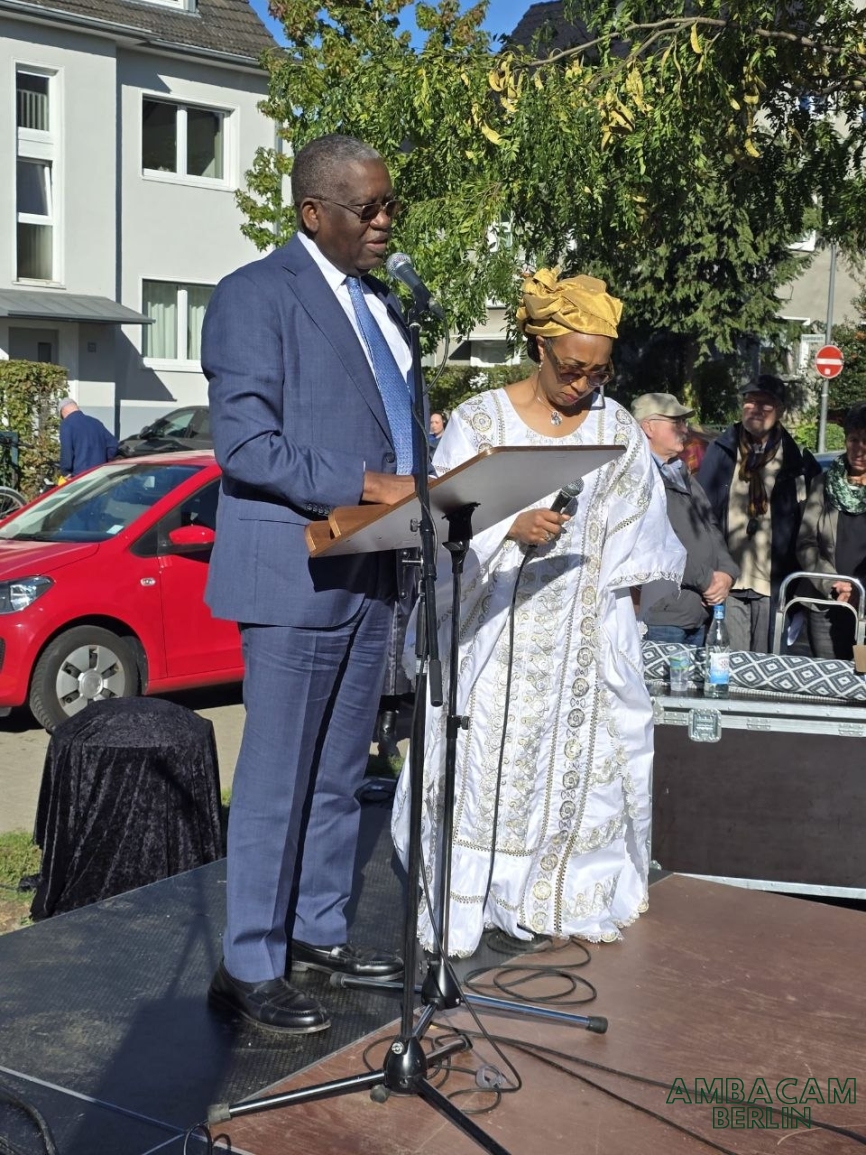
For the Embassy of Cameroon, represented by H.E. Victor NDOCKI, Ambassador of Cameroon to Germany, this initiative by the city of Cologne is an important contribution to the memory work undertaken around the shared history of Cameroon and Germany. It follows a trend already seen in other German cities, notably Ulm, Aalen, and Berlin, where similar initiatives have helped to raise awareness of the history of Cameroonian resistance to colonialism.
Beyond Rudolf Duala Manga Bell: raising awareness of the diversity of Cameroonian resistance
On this occasion, the Ambassador recalled that Rudolf Duala Manga Bell is part of a broader history of Cameroonian resistance to colonial domination.
Depending on context and circumstances, many traditional chiefs and Cameroonian personalities resisted colonization openly, favored negotiation, or chose forms of collaboration with the German administration in order to protect their communities and defend their interests.
This diversity of historical trajectories deserves to be studied and taught more widely. Cooperation between Cameroon and Germany can help encourage researchers, universities, cultural institutions, and local authorities to deepen research on these various figures, their communities, and the many forms of resistance and adaptation in the face of colonial power.
The Cameroonian community, a bridge between the two societies
The ceremony also reaffirmed the importance of the Cameroonian community in Germany in bringing the two countries closer together.
The Ambassador renewed his call to the Cameroonian community to continue playing its full role as a relay and privileged interlocutor between Cameroon and German society. Through its dynamism, skills, and commitment, it is a major asset for strengthening relations between the two countries.
Preserving and passing on a shared history
By naming a street in Cologne after Rudolf Duala Manga Bell, the local authorities help make an important chapter of Cameroonian and German-Cameroonian history more visible.
Beyond the naming of a public road, this act is part of an effort to preserve, transmit, and teach historical memory. It is a reminder of the importance of continuing the dialogue between Cameroon and Germany about their shared past, and of making this memory work a tool for knowledge, mutual understanding, and rapprochement between generations and peoples.